What Parents Should Watch Right Now: KidFund Planning vs. the New 2026 Federal Child Account Rules
Parents are asking two different questions right now:
- What can I do today to save for my child?
- How do the new 2026 federal child account rules fit into that plan?
That second question is moving fast.
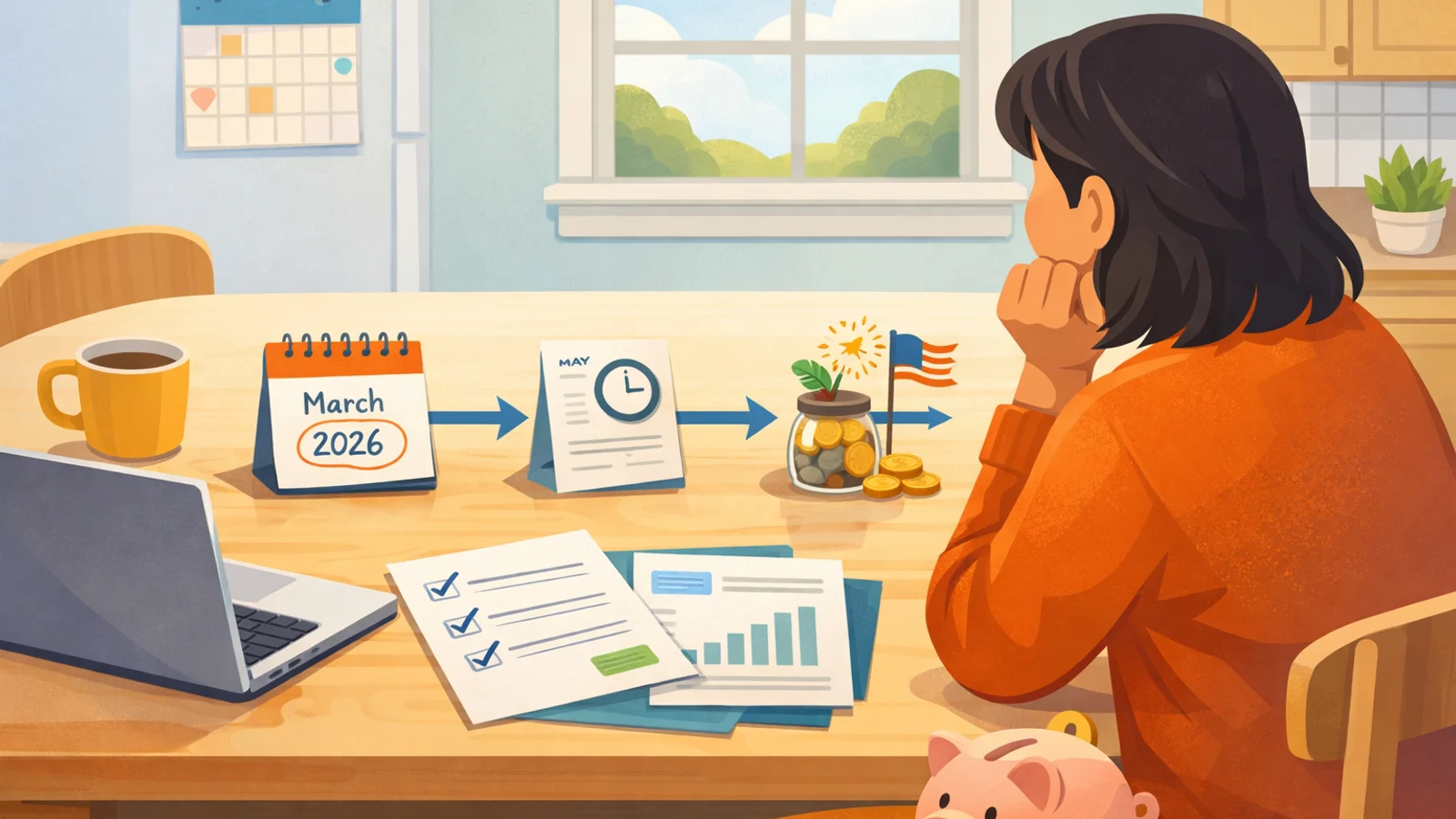
As of March 17, 2026, the IRS and Treasury have released public guidance on the new federal Trump Accounts program for eligible children. Public materials say the federal government will make a one-time $1,000 pilot-program contribution for each eligible child when the required election is made, and that no contributions can be accepted before July 4, 2026. The IRS has also published draft materials indicating that activation notices are expected around May 2026. (irs.gov)
For KidFund families, the practical point is simple: your planning timeline and the federal rollout timeline are not the same thing. KidFund can help parents organize questions and next steps, but it is not a government agency and should not be treated as an official determination source.
The main comparison parents are making
Here is the real-world comparison many families are working through.
Option 1: Wait for the federal rollout details
This makes sense if you want to:
- confirm your child is eligible
- watch for the official activation process
- understand how the election works
- avoid opening or funding the wrong account type too early
That caution is reasonable because current IRS guidance says funding cannot begin until July 4, 2026, even though families may need to prepare earlier. (irs.gov)
Option 2: Start your planning now
This makes sense if you want to:
- gather your child’s identifying documents
- make sure a Social Security number issue will not slow you down
- decide who in the family may contribute later
- set a realistic monthly savings target outside the account for now
- write down questions for your tax preparer or plan administrator
This is often the better path for busy parents because the public rules are now clear on at least two key dates: activation-related notices around May 2026 and contributions starting July 4, 2026. (irs.gov)
What is actually public right now
Based on current IRS and White House materials:
- The accounts were established under legislation enacted on July 4, 2025. (irs.gov)
- A child generally must be an eligible U.S. child within the program’s stated birth-window rules to qualify for the federal pilot contribution. Public summaries describe eligible children as those born from January 1, 2025 through December 31, 2028, with citizenship and Social Security number requirements attached. (whitehouse.gov)
- Treasury’s pilot contribution is described as $1,000 one time for each eligible child for whom an election is made. (irs.gov)
- Parents, guardians, and others may establish the account for an eligible child. (irs.gov)
- Public guidance says contributions cannot be made before July 4, 2026. (irs.gov)
- White House material says contributions from parents and others may be allowed up to $5,000 per year initially, and employer contributions up to $2,500 per year may have separate tax treatment, but families should wait for final operational details from official sources and their own advisors before relying on those features. (whitehouse.gov)
The questions parents should ask now
A useful KidFund checklist is not “How do I maximize this immediately?”
It is:
1. Is my child likely in the eligibility window?
If your child was born or will be born between January 1, 2025 and December 31, 2028, this is the first question to check against official guidance. (whitehouse.gov)
2. Do we have the documents we will need?
Parents should be ready with:
- the child’s legal name
- date of birth
- Social Security number
- parent or guardian identifying information
- any records needed if guardianship or adoption status is relevant
The IRS has said an election is required for the pilot contribution, which implies families should expect some documentation and timing requirements. (irs.gov)
3. Who might contribute after July 4, 2026?
Some families will want a parent-only approach. Others may include:
- grandparents
- relatives
- family friends
- an employer, where available
That matters because contribution coordination is easier if you decide in advance who is likely to give and how much. Public summaries say children, parents or guardians, family members, friends, and employers may contribute once contributions open. (whitehouse.gov)
4. What is our savings plan before July 4, 2026?
Because the account cannot accept contributions before that date, parents who want to build momentum may prefer to keep a separate holding plan for now, then revisit transfers or future contributions once providers and procedures are clearer. The right structure depends on your own tax, legal, and investment situation. (irs.gov)
5. Who will verify the details for us?
For most families, that means one or more of these:
- your tax preparer
- your payroll or benefits team
- the eventual account provider
- official IRS and Treasury updates
A practical KidFund timeline for spring and summer 2026
Here is a simple way to frame the next few months.
March-April 2026
Use this time to:
- confirm whether your child appears to be in the eligibility window
- gather identifying documents
- make a short list of unanswered questions
- avoid assuming the account can already be funded
Around May 2026
Watch for:
- activation-related notices
- provider instructions
- election details
- clarification on setup steps
Draft IRS materials point to May 2026 for activation-related communications. That is a planning date, not a promise that every family’s setup will be complete in May. (irs.gov)
Starting July 4, 2026
This is the key public funding date.
IRS guidance and related public materials say Trump Accounts cannot accept contributions before July 4, 2026, and White House materials say contributions will be accepted starting then. (irs.gov)
The biggest mistake to avoid
The biggest mistake is combining three separate steps into one:
- eligibility
- activation
- funding
They are not the same.
A family may be eligible but not yet activated. A family may receive activation information but still be unable to contribute before July 4, 2026. And a family may be ready to contribute but still need to confirm how the official election or provider process works. Current IRS guidance supports treating these as separate milestones. (irs.gov)
Where KidFund fits
KidFund’s role is practical:
- help parents understand the questions to ask
- help families prepare before deadlines pile up
- help compare planning paths without pretending the rules are final before they are
KidFund is not the IRS, Treasury, or an official account provider. Families should use official government guidance and qualified professional advice for tax, legal, and account-opening decisions.
Bottom line
If you are a parent looking at this in March 2026, the smartest move is usually not to rush into assumptions.
Instead:
- confirm whether your child may fall in the eligible birth window
- prepare documents now
- watch for activation notices around May 2026
- plan around July 4, 2026 as the earliest public contribution date
- use KidFund as a planning tool, not as an official ruling source
That approach keeps your family organized while the federal rollout becomes more concrete. (irs.gov)