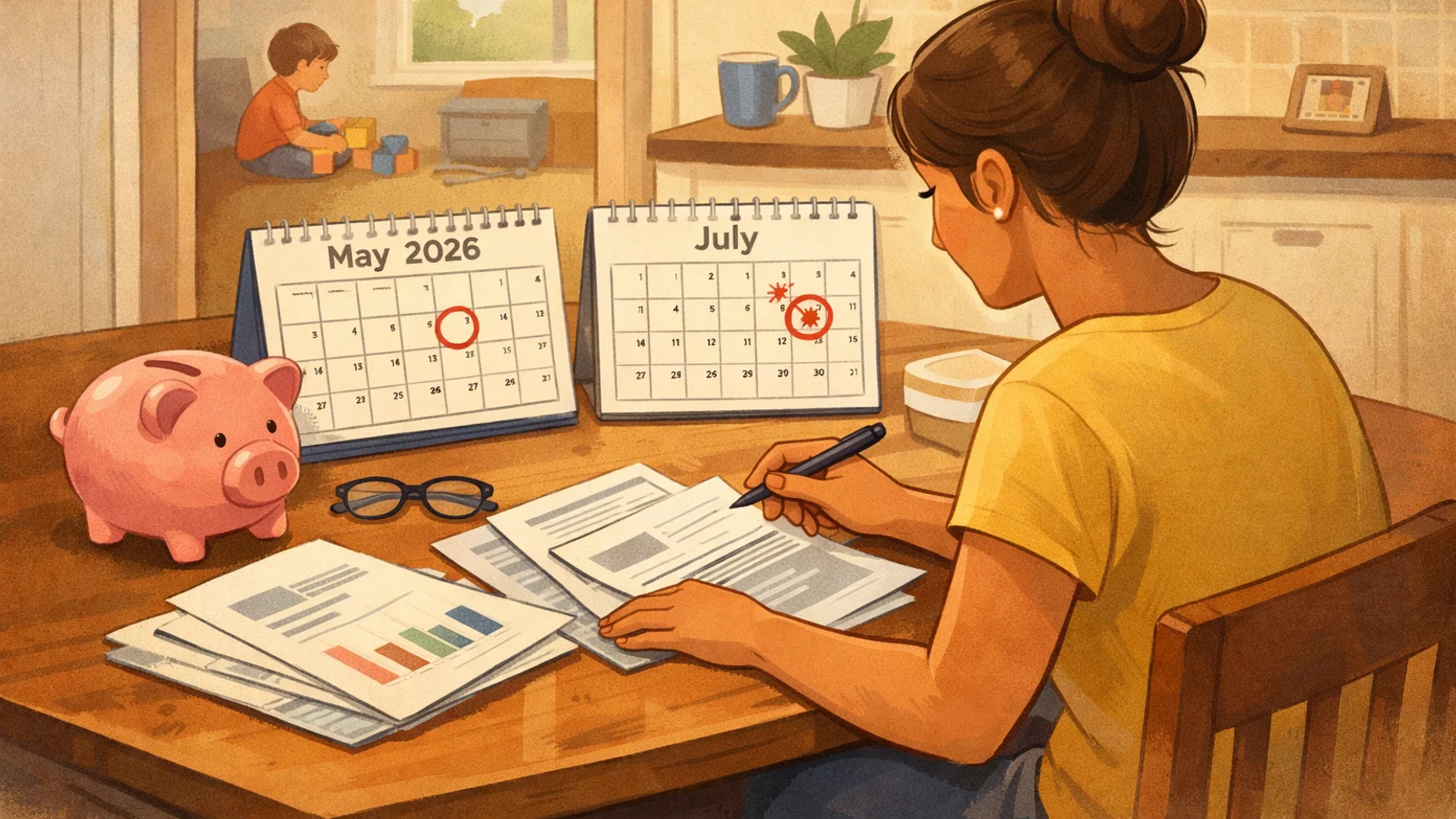
Parents have a lot of questions right now about the new child savings accounts that federal agencies are calling Trump Accounts. For KidFund readers, the practical issue is simpler: what should families do between now and the 2026 launch dates, and how should they think about these accounts alongside their existing savings plan? Official IRS guidance says activation-related information will start going out in May 2026, and contributions cannot be made before July 4, 2026. (irs.gov)
What is changing in 2026
The IRS says these accounts were created as a new type of IRA for eligible children. Current public guidance says:
- the Treasury Department or its agent will begin sending activation information starting in May 2026;
- no contributions can be made before July 4, 2026;
- some children born from January 1, 2025 through December 31, 2028 may qualify for a one-time $1,000 government pilot contribution if the required election is made; and
- annual contributions are generally capped at $5,000 for 2026 and 2027, with special rules for employer and certain exempt contributions. (irs.gov)
For parents, that means March 2026 is still a planning window, not a contribution window. If you are hearing that you need to fund an account immediately, that does not match current IRS guidance. (irs.gov)
The biggest parent questions right now
1. Do I need to do anything before May 2026?
Probably not much beyond getting organized. The main near-term task is making sure your child’s identifying information is accurate and easy to access when notices arrive. Based on IRS materials, families should expect the activation process to depend on information the Treasury Department or its agent sends beginning in May 2026. (irs.gov)
A sensible checklist:
- confirm your child has a Social Security number;
- keep tax filing records for 2025 and 2026 easy to find;
- watch for official IRS or Treasury communication, not social posts or unofficial sign-up pages;
- decide now who, if anyone, may contribute once funding opens on July 4, 2026. (irs.gov)
2. Can I open one for an older child?
Current guidance indicates accounts can be established for children who have not reached age 18, but the government’s one-time $1,000 pilot contribution is limited to eligible children born on or after January 1, 2025 and before January 1, 2029. That means an older child may still be able to have an account, but may not qualify for the pilot contribution. (irs.gov)
3. Should this replace a 529 plan or other savings?
For most families, no. A practical approach is to treat this as one account type, not your whole plan. These new accounts have their own contribution timing, eligibility, and withdrawal rules, while 529 plans serve a different purpose. IRS guidance on these new accounts is still developing, so families should be careful about moving money before they understand the tradeoffs. (irs.gov)
KidFund’s plain-English view: if you already have a working savings habit, do not let rollout excitement break it. Keep using the tools that already fit your goals, then decide after May 2026 whether this new account deserves a place in the mix.
What parents should do between now and July 4, 2026
Step 1: Separate eligibility from marketing
There is a lot of public promotion around these accounts. The most reliable baseline is still the IRS notice and related guidance: activation information starts around May 2026, and contributions begin July 4, 2026, not earlier. (irs.gov)
Step 2: Build a contribution plan now
Before friends, grandparents, or employers start asking how to help, answer these questions:
- Will you contribute monthly, quarterly, or just on birthdays?
- Who will keep track of the annual limit?
- If an employer contribution becomes available, how will that fit under the yearly cap?
IRS guidance says employers may contribute up to $2,500 per year under an employer contribution program, and that amount counts against the broader annual limit. (irs.gov)
Step 3: Be careful with assumptions about “free money”
The pilot contribution rules are real, but they are also specific. The IRS says the one-time $1,000 contribution applies to eligible children in the stated birth-date window and requires an election. Parents should not assume every child qualifies automatically or that every operational detail is final today. (irs.gov)
Step 4: Wait for official activation instructions
If you see a page asking you to enroll early, verify it carefully. The safest move is to wait for official information from the IRS, Treasury, or the program’s authorized administrator. As of March 19, 2026, the key dates in public guidance remain May 2026 for activation-related notices and July 4, 2026 for contributions. (irs.gov)
A simple planning framework for families
If you want a clean way to think about this rollout, use three buckets:
Bucket 1: Must do now
- verify your child’s records;
- watch for official notices;
- keep expectations realistic.
Bucket 2: Decide before July 4, 2026
- whether you will use the account at all;
- how much you can afford to contribute;
- whether relatives or employers may contribute.
Bucket 3: Review after activation
- account setup steps;
- investment options and fees;
- how this account fits with emergency savings, debt payoff, and education planning.
That last point matters. A child account may be useful, but it should not push a family into cash-flow stress. KidFund is not a government agency, and this article is not tax, legal, or investment advice; it is a practical planning guide based on current public information. (irs.gov)
Bottom line for March 2026
The timely takeaway is straightforward: parents do not need to rush money into these accounts today because they cannot fund them yet. The public dates that matter are May 2026 for activation-related notices and July 4, 2026 for contributions to begin. Use the next few months to get organized, compare this option with your existing savings plan, and wait for official instructions before acting. (irs.gov)